Begin of page section:
Page sections:

  • Go to contents (Accesskey 1)
  • Go to position marker (Accesskey 2)
  • Go to main navigation (Accesskey 3)
  • Go to sub navigation (Accesskey 4)
  • Go to additional information (Accesskey 5)
  • Go to page settings (user/language) (Accesskey 8)
  • Go to search (Accesskey 9)

End of this page section. Go to overview of page sections

Begin of page section:
Page settings:

English en
Deutsch de
Search
Login

End of this page section. Go to overview of page sections

Begin of page section:
Search:

Search for details about Uni Graz
Close

End of this page section. Go to overview of page sections


Search

Begin of page section:
Main navigation:

Page navigation:

  • University

    University
    • About the University
    • Organisation
    • Faculties
    • Library
    • Working at University of Graz
    • Campus
    Developing solutions for the world of tomorrow - that is our mission. Our students and our researchers take on the great challenges of society and carry the knowledge out.
  • Research Profile

    Research Profile
    • Our Expertise
    • Research Questions
    • Research Portal
    • Promoting Research
    • Research Transfer
    • Ethics in Research
    • Commission for Scientific Integrity
    Scientific excellence and the courage to break new ground. Research at the University of Graz creates the foundations for making the future worth living.
  • Studies

    Studies
    • Prospective Students
    • Students
    • Welcome Weeks for First Year Students
  • Community

    Community
    • International
    • Location
    • Research and Business
    • Alumni
    The University of Graz is a hub for international research and brings together scientists and business experts. Moreover, it fosters the exchange and cooperation in study and teaching.
Topics
  • Sustainable University
  • Researchers answer
  • Work for us
Close menu

End of this page section. Go to overview of page sections

Begin of page section:
You are here:

University of Graz astrophysics.uni-graz.at News Petri Käpylä is welcomed as new astrophysics professor
  • Our research
  • Team Astrophysics
  • Institute for Physics

End of this page section. Go to overview of page sections

Tuesday, 01 September 2026

Petri Käpylä is welcomed as new astrophysics professor

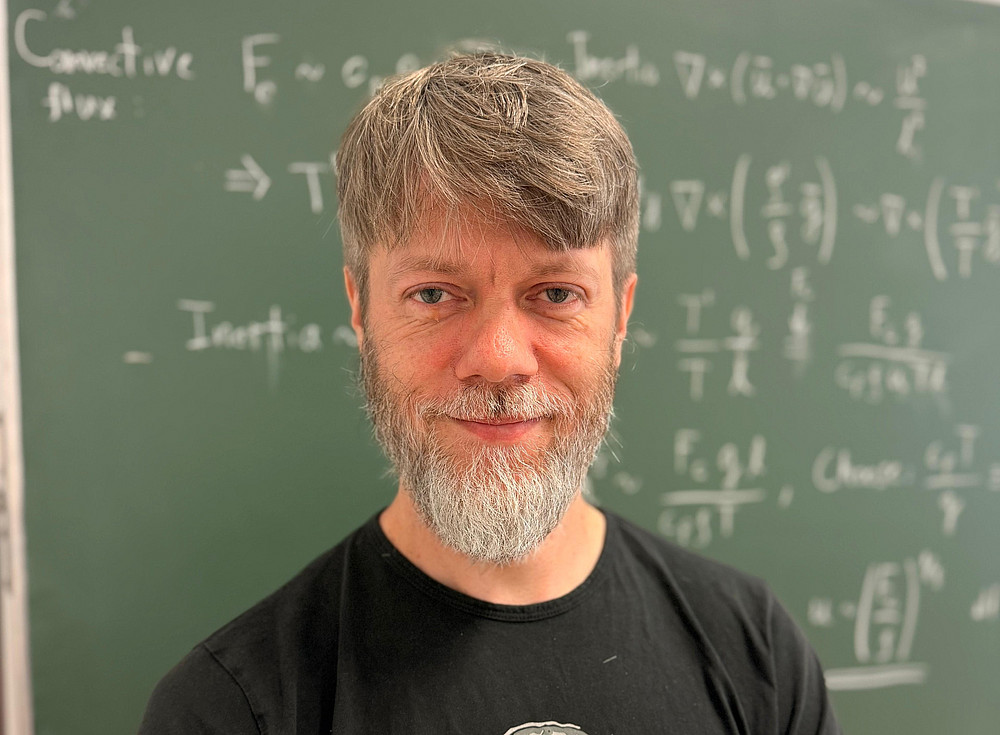
Petri Käpylä ©Ágnes Maierhofer
©Ágnes Maierhofer

Porträt von Petri Käpylä

The Department of Astrophysics welcomes Petri Käpylä as new Professor of Computational Astrophysics at the University of Graz. With a distinguished background in stellar astrophysics and computational modelling, Petri Käpylä brings extensive expertise in the study of solar and stellar convection and dynamos. His innovative research, including leadership of the ERC Advanced Grant "NEOCON," will further strengthen the department’s research and teaching in computational astrophysics.

Petri Käpylä was born in Oulainen, Finland, and lived his childhood and youth in remote countryside with no light pollution. The starry skies in the long winter nights sparked an interest in astronomy in him. Petri was also interested in computers and computing from a very young age. These lifelong interests first led to a career in astrophysics and now to his appointment as Professor of Computational Astrophysics at the University of Graz.

Petri obtained a Master's degree in astronomy in the University of Oulu in Finland on numerical simulations of accretion disks. Thereafter, his research interests shifted predominantly to the field of stellar astrophysics and especially to the problems of convection and dynamos in solar-like stars. Petri received his PhD from the University of Helsinki in 2006 on comparisons between 3D stellar convection simulations and mean-field theories of hydrodynamics and magnetohydrodynamics. Most of the research for the PhD thesis was done at the Kiepenheuer-Institut für Sonnenphysik (KIS), in Freiburg, Germany.

Thereafter, Petri had postdoc and junior group leader positions at the Nordic Institute for Theoretical Physics (NORDITA) in Stockholm, Sweden, and in the University of Helsinki, respectively. After appointments as a senior scientist at Aalto University in Espoo, Finland, and at the Leibniz-Institute for Astrophysics (AIP) in Potsdam, Germany, Petri obtained a DFG Heisenberg Fellowship to work at the University of Göttingen. Since 2023, he has been a group leader and scientist with tenure at the Institute for Solar Physics (KIS) in Freiburg.

Much of Petri's recent research has concentrated on an issue known in the field as the "convective conundrum", which is the discrepancy between current global 3D simulations and large-scale observables in the Sun. The latter include the non-uniform rotation and cyclic magnetic activity of the Sun. The core of the issue is correct modelling of flows in the solar envelope. This led to the ERC Advanced Grant "New Paradigm of Stellar Convection (NEOCON)" that Petri will be leading in Graz. The project explores the ideas that convection in Sun-like stars is driven by surface cooling, leading to highly non-local cool entropy rain, and that magnetism has a much stronger effect on large-scale convective flows than previously thought. Both of these ideas have the potential to lead to a radically new perspective to stellar convection with far-reaching consequences in other fields of astrophysics. The group of computational astrophysics will work intensively on implementing the new ideas of convection in numerical simulations over the next years.

Homepage Astrophysics and Solar Physics

Related news

Cycling Adventure: Guest reseacher Gregory Kopp Tours Austria

During his stay as a guest researcher at the University of Graz, Gregory Kopp embarked on an impressive five-day bike tour: from Lienz over the Großglockner High Alpine Road, through Zell am See, into Berchtesgaden and to Königsee in Germany, then through Salzburg and along the lakes to the east, and finally south to Hallstatt. Covering more than 340 km and about 6,000 meters of elevation, this route took him through some of Austria’s most stunning scenery.

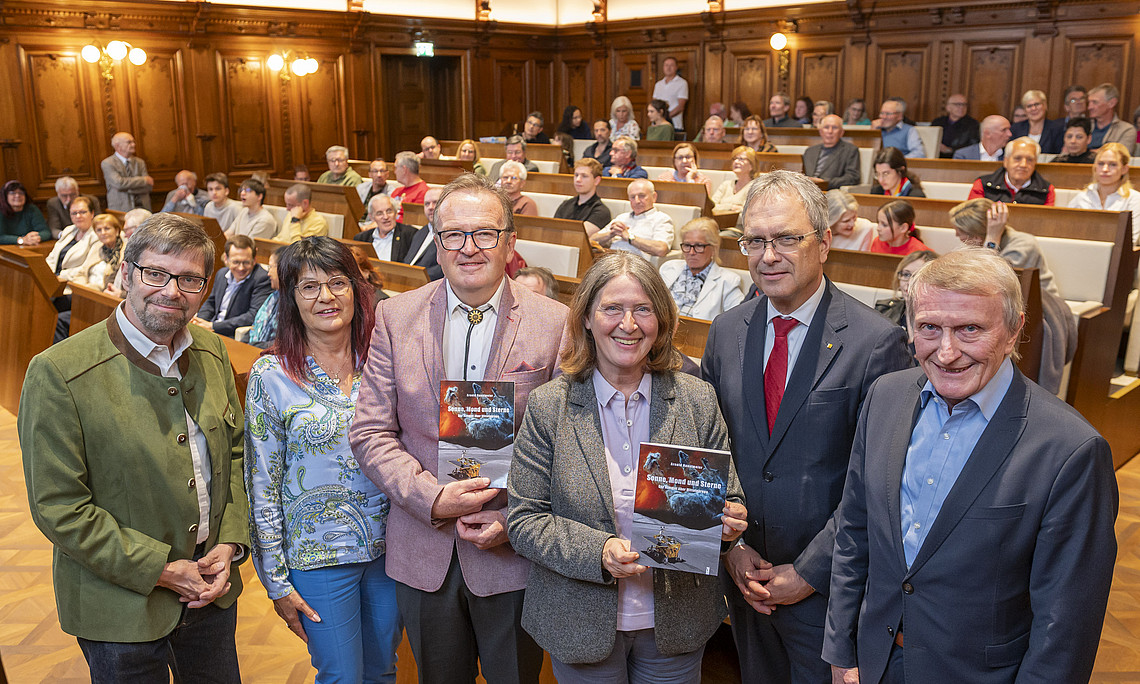
Book launch by Professor Arnold Hanslmeier at Graz City Hall on 29. April 2026
Accelerated communication with the Kanzelhöhe: solar observatory moves closer to the university

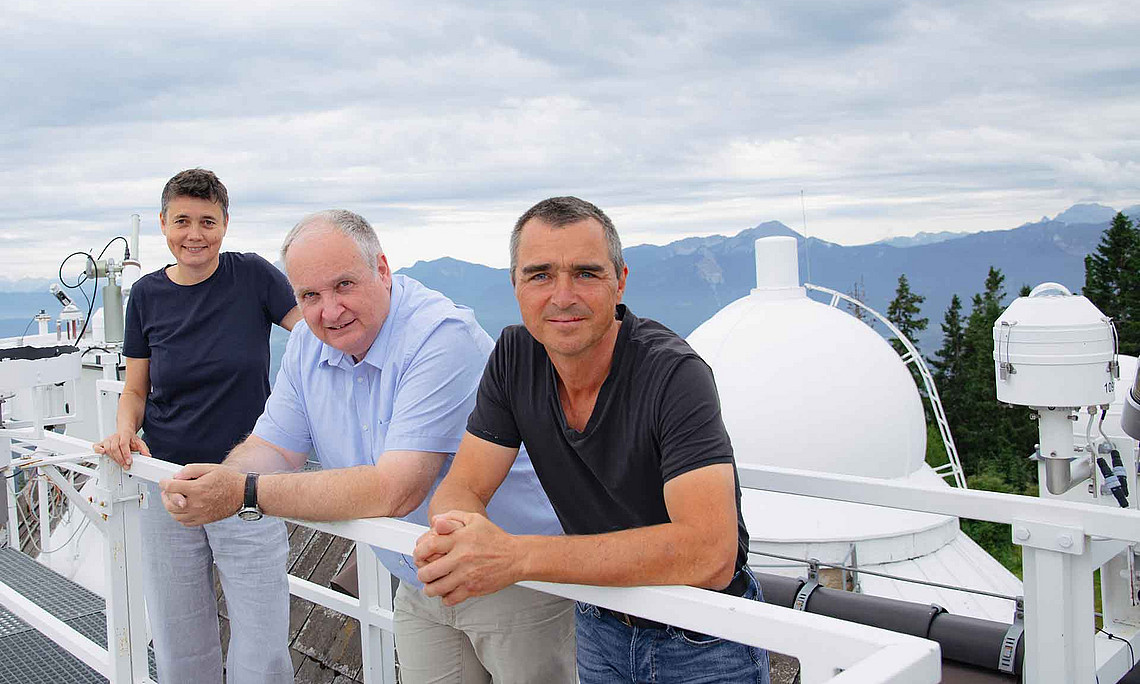
From mid-December, the train journey from Graz to Villach will be reduced to just over an hour. This faster railway connection through the Koralm Tunnel will also bring the Kanzelhöhe Observatory for Solar and Environmental Research closer. Although this unique research station at 1500 metres above sea level is located on the Carinthian Gerlitzen, it has been part of the University of Graz for more than 75 years.

PhD Candidate Greta Cappello Awarded the 2025 Amelia Earhart Fellowship

Greta Cappello, a PhD candidate at the Institute of Physics, University of Graz, under the supervision of Prof. Manuela Temmer, has been awarded the 2025 Amelia Earhart Fellowship by Zonta International. The fellowship was formally presented last weekend in Aschaffenburg by Dr. Jutta Trube, Governor of Zonta District 14, and Ing. Petra Hackenberg-Wiedl from the Zonta Club Ingolstadt. This prestigious recognition supports Zonta’s mission to advance equality and create a world of better opportunities for women and girls.

Begin of page section:
Additional information:

University of Graz
Universitaetsplatz 3
8010 Graz
Austria
  • Contact
  • Web Editors
  • Moodle
  • UNIGRAZonline
  • Imprint
  • Data Protection Declaration
  • Accessibility Declaration
Weatherstation
Uni Graz

End of this page section. Go to overview of page sections

End of this page section. Go to overview of page sections

Begin of page section:

End of this page section. Go to overview of page sections